


Hotel All Department Log Book: Format and Uses | Importance of Hotel Department Log Books

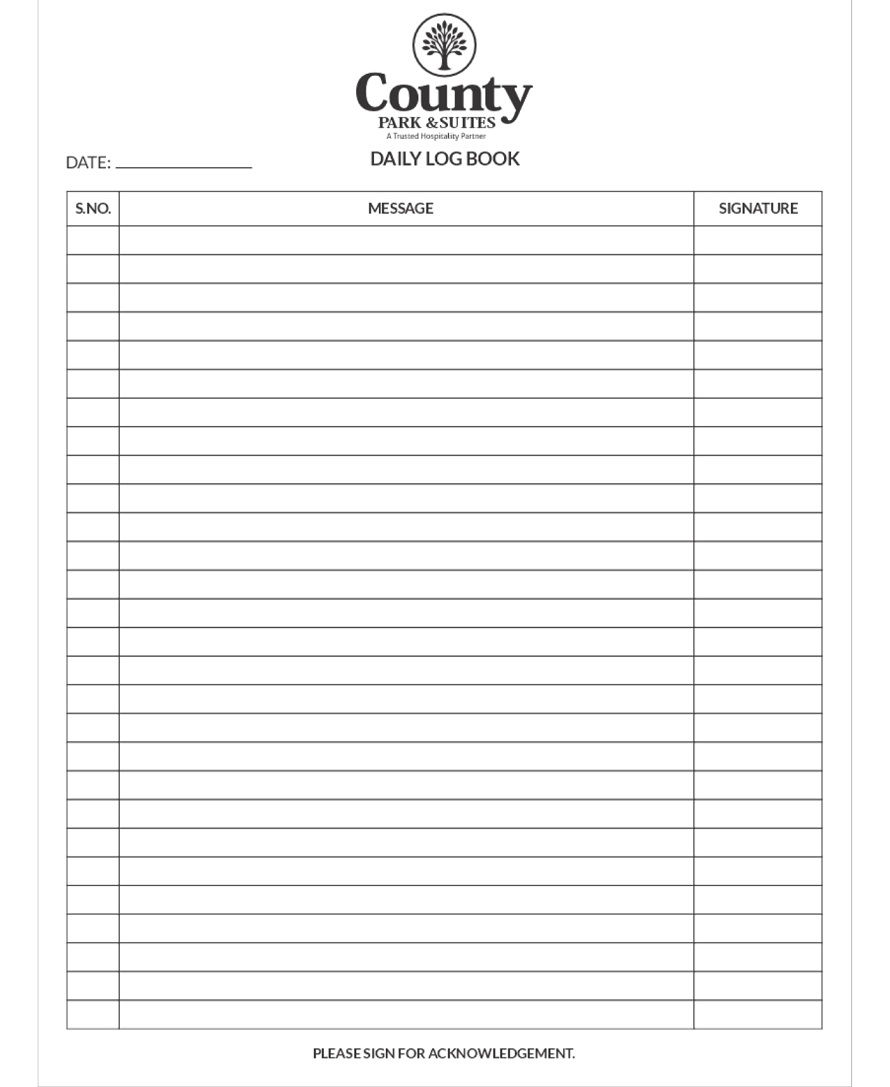
In hotel operations, clear communication and proper documentation are essential to ensure smooth daily functioning. One of the most important yet often overlooked operational tools is the Department Log Book. Every department in a hotel maintains its own log book to record important information, handover details, incidents, and daily activities.
What Is a Hotel Department Log Book?
A Department Log Book is an official record maintained by each hotel department to document daily events, instructions, issues, and follow-ups. It acts as a communication bridge between shifts, departments, and management.
Standard Log Book Format (Common for All Departments)
Although each department may add specific columns, a standard hotel log book format usually includes:
Date
Shift (Morning / Evening / Night)
Time
Department Name
Details of Activity / Issue
Action Taken
Pending Follow-up
Name & Signature of Staff
Supervisor / HOD Remarks
This format ensures clarity, accountability, and continuity between shifts.
Department-Wise Log Book Format and Uses
1. Front Office Log Book
Uses:
VIP arrivals and departures
Guest complaints and resolutions
Room status issues
Special instructions from management
Handover notes between shifts
Key Entries:
Guest name & room number
Nature of complaint or request
Action taken and follow-up status
2. Housekeeping Log Book
Uses:
Room cleaning status
Maintenance issues reported
Lost and found entries
Linen and amenities shortages
Special guest requests
Key Entries:
Room number
Issue description
Time reported to maintenance
Rectification status
3. Food & Beverage Service Log Book
Uses:
Restaurant and bar operations updates
Menu item shortages
Guest feedback
Special events or reservations
Staff duty handover
Key Entries:
Outlet name
Issue or instruction
Responsible staff
4. Kitchen Log Book
Uses:
Daily production notes
Equipment breakdowns
Food safety and hygiene issues
Menu changes
Stock shortages
Key Entries:
Section (Main kitchen, Bakery, Banquet)
Issue reported
Corrective action taken
5. Banquet Log Book
Uses:
Event details and timelines
Setup requirements
Client instructions
Consumption and service notes
Post-event feedback
Key Entries:
Event name
Pax
Setup type
Special remarks
6. Engineering / Maintenance Log Book
Uses:
Equipment faults
Preventive maintenance records
Emergency breakdowns
Energy consumption notes
Key Entries:
Location
Nature of fault
Time attended and resolved
7. Security Log Book
Uses:
Visitor and vendor movement
Incident reports
Fire safety checks
Night audit patrols
Key Entries:
Time
Area patrolled
Observations
Action taken
8. Stores & Purchase Log Book
Uses:
Stock receipts and issues
Vendor deliveries
Reorder reminders
Damaged or expired items
Key Entries:
Item name
Quantity
Supplier
Remarks
9. HR & Administration Log Book
Uses:
Staff attendance issues
Disciplinary actions
Training records
Staff grievances
Key Entries:
Employee name
Issue / training details
Management remarks
Importance of Hotel Department Log Books
Maintaining proper log books helps hotels:
Ensure smooth shift handovers
Track unresolved issues
Improve accountability and transparency
Support audits and SOP compliance
Enhance inter-department communication
At County Park & Suites, department log books are a key part of operational discipline and service consistency.

Hotel department log books are more than just registers—they are powerful communication tools that ensure continuity, efficiency, and accountability across all departments. A well-maintained log book helps hotel management stay informed and ensures no important detail is missed.
Implementing standardized log book formats across all departments is a best practice for achieving operational excellence and superior guest satisfaction.


