


Hotel Luggage Tag and Bottle Tag: Importance, Types, and Uses in the Hospitality Industry
- admin

- Dec 13, 2025
- 3 min read
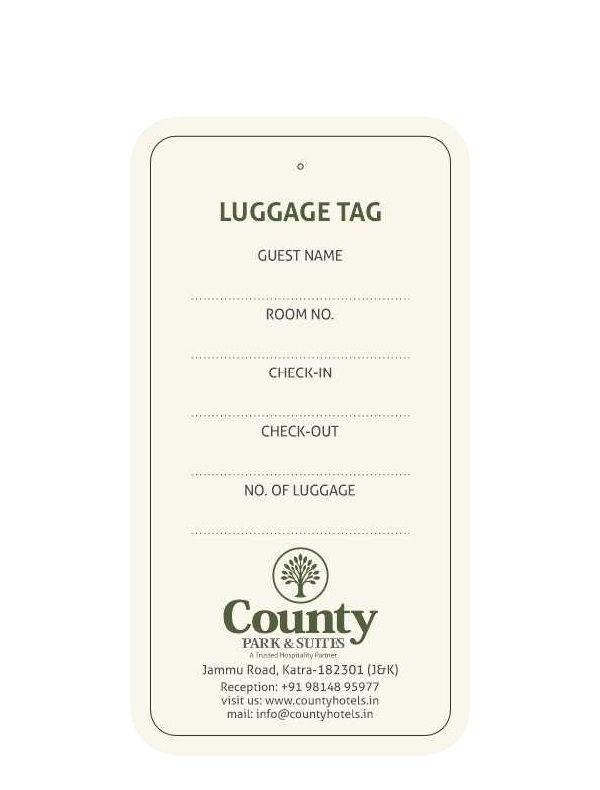
In the hospitality industry, every small detail contributes to the overall guest experience and brand image. Items like hotel luggage tags and bottle tags may seem minor, but they play a vital role in guest convenience, safety, branding, and service efficiency. Well-designed tags reflect a hotel’s attention to detail and commitment to quality service.
What Is a Hotel Luggage Tag?
A hotel luggage tag is an identification tag attached to a guest’s luggage during check-in, bell desk handling, storage, or transfers. These tags help ensure accurate handling and safe delivery of guest belongings.
Key Information on a Luggage Tag
Guest name
Room number
Check-in/check-out date
Number of bags
Hotel name and logo
Bell desk or staff signature (optional)
Importance of Hotel Luggage Tags
1. Guest Safety and Security
Luggage tags minimize the risk of baggage loss or mix-ups, especially during busy check-ins or group arrivals.
2. Operational Efficiency
They help bell desk and front office teams manage luggage systematically and deliver bags promptly to the correct room.
3. Professional Brand Image
Customized luggage tags with the hotel logo enhance brand identity and create a premium impression.
4. Guest Convenience
Clear identification makes it easier for guests to recognize their bags, especially during check-out or luggage storage.
Types of Hotel Luggage Tags
Paper/Cardboard Tags – Economical and commonly used for short stays
Plastic or PVC Tags – Durable and reusable
Leather or Faux Leather Tags – Premium hotels and luxury resorts
RFID Luggage Tags – Used in high-end or tech-enabled properties
Customized Branded Tags – Featuring hotel logo and design

What Is a Hotel Bottle Tag?
A hotel bottle tag is a small printed or branded tag placed on water bottles, minibar bottles, wine bottles, or welcome drinks in guest rooms, restaurants, or banquets.
Uses of Bottle Tags in Hotels
1. Guest Communication
Bottle tags can carry important messages such as:
“Complimentary with Our Compliments”
“Chargeable Item”
“Refilled & Purified Water”
Safety or hygiene information
2. Branding and Marketing
Bottle tags are an excellent medium to showcase:
Hotel name and logo
Sustainability initiatives
Promotional offers or QR codes
3. Compliance and Transparency
They help inform guests whether bottled water is complimentary, chargeable, or refillable, avoiding confusion and disputes.
4. Sustainability Messaging
Eco-friendly hotels use bottle tags to promote glass bottles, filtered water systems, and environmental responsibility.
Types of Hotel Bottle Tags
Paper or Card Bottle Tags – Cost-effective and customizable
Waterproof Synthetic Tags – Suitable for chilled bottles
Hang Tags – Easy to place on bottle necks
Luxury Bottle Tags – Used for wine and premium beverages
QR Code Bottle Tags – Link to menus, offers, or sustainability policies
Benefits of Well-Designed Tags in Hotels
Enhances guest experience
Reduces operational errors
Improves brand visibility
Supports sustainability goals
Creates a professional and organized appearance
Best Practices for Hotels
Use clear, legible fonts and durable materials
Ensure consistent branding across all tags
Train staff on correct usage and handling
Choose eco-friendly materials wherever possible
Keep tag information simple and guest-friendly
Hotel luggage tags and bottle tags are small yet essential elements that contribute significantly to smooth hotel operations and memorable guest experiences. When designed thoughtfully, they not only improve efficiency and safety but also reinforce a hotel’s brand identity and professionalism.
Investing in quality, well-branded tags reflects a hotel’s commitment to excellence—proving that even the smallest details matter in hospitality.


Comments