Hotel Owner Interference: Losses in Hospitality


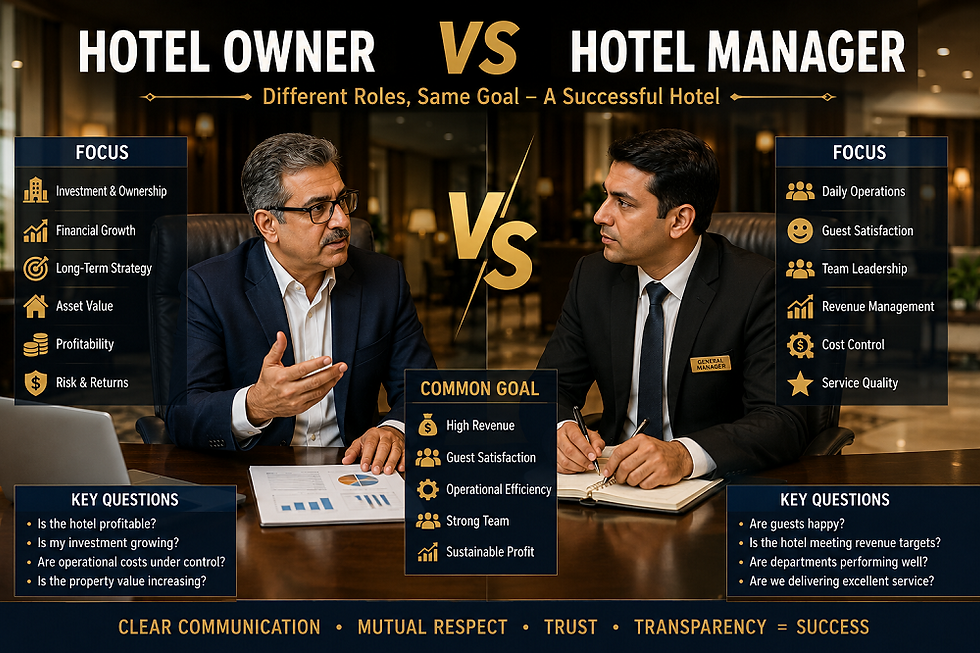
In the hospitality industry, owner involvement is essential for vision, investment decisions, and long-term growth. However, excessive or unstructured owner interference in daily hotel operations often leads to operational inefficiencies, financial losses, and declining guest satisfaction.
This post explains how owner interference impacts hotel performance, common areas of concern, and how to balance ownership oversight with professional management.
What Is Owner Interference in Hotels?
Owner interference occurs when hotel owners directly intervene in day-to-day operational decisions that are normally managed by professional hotel leadership—such as pricing, staffing, vendor selection, and guest handling—without following established SOPs.
Key Areas Where Owner Interference Causes Losses
1. Revenue Loss Due to Rate Undercutting
Offering unauthorized discounts to guests or agents
Ignoring revenue management strategies
Bypassing sales and revenue teams
Impact:
Rate dilution
Brand value erosion
OTA and corporate rate conflicts
2. Increased Operational Costs
Direct appointment of vendors without SOPs
Price-based purchasing without quality checks
Frequent last-minute changes
Impact:
Poor quality supplies
Higher wastage and rework
Increased maintenance costs
3. Staff Demotivation & High Attrition
Overruling managers in front of staff
Direct instructions to junior employees
Favoritism or inconsistent discipline
Impact:
Loss of authority of management
Low morale and productivity
Increased recruitment and training costs
4. SOP Breakdown & Service Inconsistency
Bypassing standard operating procedures
Ad-hoc decisions in guest handling
Ignoring brand standards
Impact:
Inconsistent guest experiences
Negative online reviews
Reduced repeat business
5. Poor Guest Experience & Reputation Damage
Owner-driven service promises without operational alignment
Over-commitment to VIP guests
Unprofessional guest interactions
Impact:
Service failures
Online reputation damage
Loss of loyal customers
6. Financial Control & Compliance Risks
Cash handling outside accounting SOPs
Unapproved credit to corporates or agents
Ignoring statutory and audit processes
Impact:
Revenue leakage
Legal and tax risks
Audit failures
Why Owner Interference Happens
Emotional attachment to the property
Lack of hospitality industry knowledge
Trust issues with management
Short-term profit focus
Absence of clear governance structure
The Right Role of a Hotel Owner
Strategic, Not Operational
Focus on vision, ROI, and asset growth
Approve budgets, CAPEX, and major investments
Review performance through structured reports
Governance & Oversight
Appoint qualified leadership (CEO / GM)
Define authority matrix
Conduct monthly and quarterly reviews
Best Practices to Reduce Owner Interference
1. Clear Role Definition
Separate ownership and management roles
Define decision-making authority levels
2. Strong SOP & Governance Framework
Implement SOPs across all departments
Use dashboards and MIS reports
Conduct regular audits
3. Professional Management Structure
CEO → COO → Operations Director → GM
Single point of command
4. Structured Communication
Weekly updates, monthly reviews
Avoid direct instructions to junior staff
Owner Involvement That Adds Value
Positive Involvement | Negative Interference |
Strategic planning | Daily operational orders |
Capital investment | Rate discounting |
Brand expansion | Staff micro-management |
Performance reviews | Vendor favoritism |
Real Cost of Owner Interference
Revenue decline due to price dilution
Increased staff turnover
Loss of brand credibility
Poor guest loyalty
Reduced asset value
While hotel owners play a crucial role in shaping the business, unstructured interference in operations leads to measurable losses in hospitality. The most successful hotels strike a balance—owners provide vision and oversight, while professional management executes operations through SOPs.
Hotels that respect this balance achieve higher profitability, stronger teams, and superior guest experiences.