


Main Store Purchase Order Book | Department-Wise Material Indent | Daily Market Perishable Requirements
- admin

- Dec 17, 2025
- 2 min read
Efficient store and purchase control systems are the backbone of smooth hotel operations. Whether it is food supplies, housekeeping consumables, engineering materials, or daily fresh produce, proper documentation ensures cost control, accountability, and uninterrupted service.
The importance, formats, and best practices of the Main Store Purchase Order Book, Department-Wise Material Indent, and Daily Market Perishable Requirements in hotels and hospitality establishments.
1. Main Store Purchase Order (PO) Book
What Is a Main Store Purchase Order Book?
The Purchase Order Book is an official record of all authorized purchases made by the hotel. It serves as a legal and financial document issued to vendors specifying the quantity, quality, rate, and delivery terms of goods.
Purpose of a Purchase Order Book
Ensures authorized procurement
Prevents unauthorized or duplicate purchases
Helps in vendor accountability
Supports accounts and audit processes
Key Details in a Purchase Order Book
PO number & date
Supplier name & contact details
Item description & specifications
Quantity ordered
Unit rate & total value
Delivery date & location
Payment terms
Authorized signatures (Store/Purchase/Management)
Best Practices
Use pre-numbered PO books
Issue PO only after approved indent
Maintain separate PO series for food & non-food
Cross-check PO with GRN and invoices
2. Department-Wise Material Indent
What Is a Material Indent?
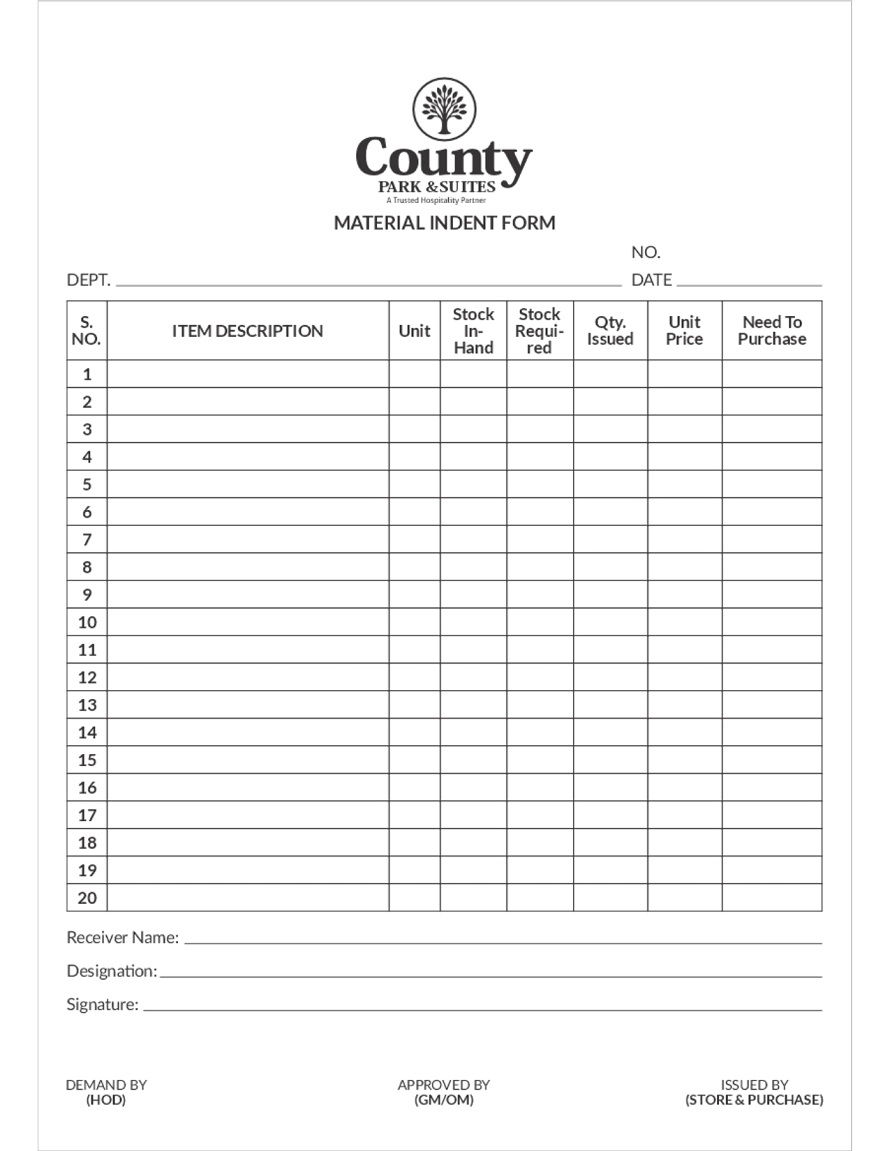
A Material Indent is an internal request raised by departments to obtain materials from the main store or for purchase. It ensures that supplies are issued only as per approved requirement.
Importance of Department-Wise Indents
Controls consumption and wastage
Tracks department-level usage
Supports budget monitoring
Improves stock planning
Common Departments Using Indents
Kitchen (Food & Beverage)
Housekeeping
Engineering
Front Office
Security & Administration
Key Details in a Material Indent
Department name
Indent number & date
Item description
Required quantity
Purpose of use
Stock available (if applicable)
Approved by HOD
Issued by store signature
Best Practices
Indents must be approved by HOD
Issue items on FIFO basis
Monitor high-value items separately
Conduct monthly consumption analysis

3. Daily Market Perishable Requirements
What Are Daily Market Perishable Requirements?
These are fresh food items purchased daily from the local market to maintain quality, freshness, and guest satisfaction, especially for kitchen operations.
Examples of Perishable Items
Vegetables & fruits
Milk & dairy products
Meat, fish & poultry
Bakery items
Fresh herbs
Why Daily Market Lists Are Important
Ensures freshness of food
Reduces storage losses
Controls daily food cost
Supports menu planning
Key Details in a Daily Market Requisition
Date
Item name
Quantity required
Approximate rate
Vendor/market name
Approved by Executive Chef / F&B Manager
Purchased quantity & actual rate
Best Practices
Prepare list based on forecasted covers
Compare market rates daily
Avoid over-buying
Verify quality at receiving point
Operational Benefits
Strong purchase and cost control
Transparent vendor dealings
Reduced wastage and pilferage
Better inter-department coordination
Smooth audits and compliance

The Main Store Purchase Order Book, Department-Wise Material Indent, and Daily Market Perishable Requirements together form a structured procurement and inventory system in hotels. When used correctly, these tools help maintain quality standards, cost efficiency, and operational discipline, ensuring uninterrupted service to guests.
A well-managed store is the foundation of a profitable hotel.


Comments